The Long Winter, Chapter 9: Cap Garland

Guest post by Susan Barton Malphurs

And so it begins. Learning at the schoolhouse, relationships that would blossom for years to come… and the snow. Named for the hero of so many hearts, the chapter opens with Laura thankful for the walls of the house, specifically for their capacity to separate her family from the strangers. By chapter’s end Laura would indeed be forever grateful for the protective walls of the town’s buildings. (And I would find welling up a distinct desire to pull the quilt snugly about my chin, drawing closer to a glowing fire!)

Laura and Carrie nervously ready themselves for their first day of school, while Mary wishes she could go with them. Carrie fumbles so fretfully with her shoe buttons that one pops off. Ma recovers the button from its tumble downstairs and shores up not only Carrie’s little shoe, but the girls’ restless spirits. She need not reassure them of their academic preparedness; Laura is confident in their lessons at home. But Ma’s satisfied smile at their polished appearance, clad in their wool winter dresses and Sunday hair ribbons, must have eased their hearts a bit about the reception they would receive from the strangers beyond the sheltering walls.

The girls set out for the schoolhouse. Main Street seems wide and a bit daunting to cross. The schoolhouse seems remotely situated away from the streets lined with buildings. Laura protectively holds Carrie by the hand. Her insecurities mount as they approach the schoolhouse and

Laura begins to compare herself with the appearance of the other girls watching the boys at play.
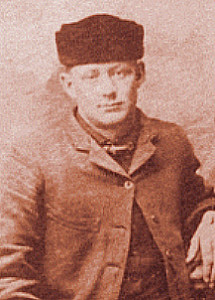
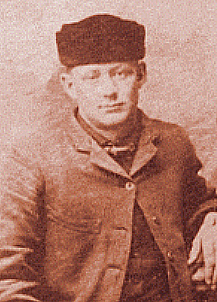
Cap Garland

And then she sees him: the boy with the fair hair and blue eyes who “moved as beautifully as a cat.” This is Laura’s first glimpse of Cap Garland, who would later come to enchant her heart, even if for a brief and private time, over that of her Manly. Quite spontaneously, Cap tosses a ball to Laura, who in turn catches it mid-air. With the boys protesting and the other girls looking on, Laura sinks with embarrassment and continues to measure herself against the appearance of the other girls.

Despite her continued sense of awe at the orderly schoolroom and its polished desks in neat rows, Laura begins to feel a bit of ease. Her teacher, Cap’s sister, readily assesses Laura’s learning level and settles Laura and Carrie into their own seats. Laura takes comfort in the familiar Bible reading from the 23rd Psalm. (I would not doubt that in her heart Laura recites these words again before the day comes to a close.)  As the week progresses, Laura makes quick friends of Mary Power and Minnie Johnson, joining them at recess to watch the boys play catch: Ben Woodworth, Arthur Johnson … and Cap. Cap, whose grin “changed everything.” At night Laura conveys the day’s lessons to Mary, who dreams of attending college. The family’s new routine of life in town settles in comfortably for the winter.

When Monday comes again, Laura cringes at wearing her red flannel underwear. Ma insists that, while the weather is mild, it is the proper time of year to wear the extra, albeit itchy, layer of clothing. As Laura finds herself thoroughly distracted from her lessons by the irritating flannels, the schoolroom is at once startlingly overshadowed. The immediate, blanketing gloom is not unnoticed by the children or Miss Garland. Laura knows this sky, this hush, just as the wild animals at Plum Creek had known. Her thoughts turn to Pa and his whereabouts, to Carrie and her fragile nature, to the polished desks and their longevity as a heat source.

As worry seizes Laura, the schoolhouse door opens to a bundled Mr. Foster, come to bring the children back to town. The children quickly, but quietly, gather their wraps, and in this moment Cap loses his smile. Laura takes great care to prepare Carrie in body and spirit as best she can. The moment the children step out of the schoolhouse, the snow swallows them in a blinding white pool. The winds whip them about, stealing their senses. No longer able to see, hear, feel or speak, the little band is consumed.

Laura soon realizes that they should have reached Main Street by now. Miss Garland and Mr. Foster seem to come to the same conclusion, hesitating in confusion. From the corner of her eye, Laura sees Cap’s shadowy figure tear away into the blizzard alone. She senses that Cap is correctly headed toward Main Street, but trudges on with the rest of the group… away from what she intuitively knows to be safe harbor. Have they passed the last shelter of town only to be lost on the boundless prairie? Laura realizes in the pause just how numb with cold she has grown and fears for Carrie’s ability to forge on much longer.

At that moment Laura is buffeted by something hard… something solid… a wall. Her calls to the others go out in vain. With all her breath she calls again into the deafening howls of the wind, managing to draw attention. The group huddles near, following the wall… Mead’s Hotel, the last building of town before open prairie. The lined street provides navigation for each child to now find their way to family and shelter. At their own door, Laura finds her hands too numb to use the handle. Pa, preparing to leave in search of his girls, ushers them in near the fire, which warmed them from without, while Ma’s ginger tea warms them from within: the tea and the spirit of home, and of family.  

Cap Garland had indeed reached town in search of help for the lost group. “Cap Garland’s a smart boy,” declares Pa, grateful to have his girls gathered around him. Just how smart and how courageous they have yet to learn … but for now the snow is outside and they are inside — together. And that is all that matters.

Posted in Uncategorized Tagged with:

A Word from Willie

“They can’t ride on my velocipede!”

The phrase springs into my head upon the mere mention of the name Willie Oleson.

Willie is a fun character, I think.  Like the character of Nellie, Willie in the book series is a composite of more than one real boy. (Although the Plum Creek Willie was surely based on Willie Owens, Nellie Owens’ little brother, remember that the Owens family didn’t continue on to De Smet as Laura portrays the Olesons as doing in the books. The boy in Laura’s class in De Smet who played foolish was therefore another child, whom Laura names as Will Bennet in Pioneer Girl.)

He’s your typical annoying little brother, a character type that could not be developed within the Ingalls family itself and works so well by putting him with an equally annoying big sister, Nellie.

Jonathan Gilbert — the brother of Melissa Gilbert, aka “Laura” — played the role of Willie Oleson on the longstanding Little House on the Prairie television series — and he played it well. We all know, of course, that Melissa has joined the world of Little House once again by playing the role of Caroline Ingalls in the musical currently touring its way across the continent. But a fun fact that some may not yet realize is that the part of Willie Oleson in the musical is played by another close male relative of Melissa’s — this time, her son rather than her brother.

Scholastic has a fun interview with Melissa’s son, 14-year-old Michael Boxleitner, on their blog this week. Grab a fistful of candy in Willie’s memory and enjoy!

Posted in Uncategorized Tagged with: ,

Fun in Mankato and Walnut Grove

Oh, I’m so excited. We’ve got some details to add about the Walnut Grove field trip and activities in Mankato this summer during LauraPalooza.

First, two Walnut Grove natives, Denise Tietz and Catherine DeBates, are public relations students in my department at MSU. They’ve taken on the task of organizing activities for those who want to continue to Walnut Grove on Saturday afternoon.

Denise’s family has been involved with the Pageant and all the fun activities at WG for years; in fact, her mother sews up the bonnets and other fun costume pieces available for sale in the museum gift shop at WG. Catie’s family, too, has been heavily involved in what’s really a main attraction of southwestern Minnesota.

So your field trip includes:

* Admission to the Laura Ingalls Wilder Museum (which will feature Dean Butler as a speaker that Saturday afternoon);

* Shuttle to the Plum Creek Dugout Site and the Pageant grounds for tours on buses;

* Admission to the Pageant Supper for dinner;

* Reserved seating at the Pageant.

We anticipate that most will want to drive themselves, and some might continue on to De Smet for that town’s weekend activities, but we’re taking a tally of those who want alternate transportation to WG so we can arrange that if needed.

For those who want to stay in Mankato Saturday afternoon, the Betsy-Tacy Society will have extended hours, from noon to four, with costumed guides of the Betsy and Tacy houses. Additionally, society volunteers will be offering family activities Friday morning from 10 to noon, as a third track of LauraPalooza activities, which will include conversations with Betsy and with Laura, a walking tour of the neighborhood, and storytelling. We’re very excited about your partnership with the Betsy-Tacy Society! You might even see some of your favorite characters from both series at the Wednesday night ice cream social at the dorms!

There’s still plenty of room in the dorms and plenty of time to register for LauraPalooza. Hope to see you there!

Posted in Uncategorized Tagged with: , ,

Homesteader’s New Numbering System

The Homesteader just sent off its sixteenth issue. We’ve been in print for eight years! Sometimes I can’t quite believe that myself. All the thanks goes to you, the readers. Without an audience, there would be no Homesteader.

I’d like you to know that we’ve made a change with the latest issue–a change for the better. 

It’s become clear that our issue numbering system needs to be simpler. Instead of working with separate volume and issue numbers, i.e., Volume 5, Issue 2, we’re now simply numbering the issues incrementally with whole numbers — Issue 1, Issue 2, Issue 3, etc. Pretty straightforward. We thought you’d like it that way.

We expect that for some time there will be some overlap, especially as we use up inventory for incoming orders. For your reference, here’s how the new numbering system corresponds to the old:

(Details on all the issues to date can be found here.)

Issue New name Old name
Summer 2002 Issue 1 Volume 1, Issue 1
Winter 2002-2003 Issue 2 Volume 1, Issue 2
Summer 2003 Issue 3 Volume 2, Issue 1
Winter 2003-2004 Issue 4 Volume 2, Issue 2
Summer 2004 Issue 5 Volume 3, Issue 1
Winter 2004-2005 Issue 6 Volume 3, Issue 2
Summer 2005 Issue 7 Volume 4, Issue 1
Winter 2005-2006 Issue 8 Volume 4, Issue 2
Summer 2006 Issue 9 Volume 5, Issue 1
Winter 2006-2007 Issue 10 Volume 5, Issue 2
Summer 2007 Issue 11 Volume 6, Issue 1
Winter 2007-2008 Issue 12 Volume 6, Issue 2
Summer 2008 Issue 13 Volume 7, Issue 1
Winter 2008-2009 Issue 14 Volume 7, Issue 2
Summer 2009 Issue 15 Volume 8, Issue 1

And now the latest issue, Winter 2009-2010, is simply Issue 16. Details on that issue will be released momentarily. It’s a good ‘un!

Posted in Uncategorized Tagged with:

Wading in Plum Creek

Plum Creek at Eye Level

Plum Creek from the water surface

One of the best experiences you can have at Walnut Grove is wading in Plum Creek at the Dugout Site. Make sure you bring along a towel and maybe a change of clothes with you in case of accident. I hadn’t gone wading my first few trips, because I’ve gone wading in creeks around home and not particularly enjoyed it, but Plum Creek is much, much nicer to wade in than any other creek I’ve been in. The bottom is mostly flat. The main channel is rounded sand that feels good on the feet. The first time I went,  if I stood still small fish nibbled at my feet just like Laura’s.

The water is cold so be prepared for that. My first time wading it was just around my ankles. This year it was practically up to my knees and I stepped into one deep hole that was a shockingly quick dip halfway up my thigh. Many people like to go in and wade across the creek to the dugout site. However, the banks right there are steep

Wading in Plum Creek

Wading in Plum Creek

and muddy. I have seen people have trouble getting up, especially on the dugout side. I prefer to get in and out at the Big Rock where the bank slowly levels into the creek. Last time I could wade from there all the way to the dugout, but this time a fallen tree blocked me, but it was still a nice long wade. It’s an experience I highly recommend and it’s always fun to even watch other people wade, especially the girls in their Laura dresses. So, with apologies to Douglas Adams, grab a towel and climb in the creek.

Sarah S. Uthoff,

http://trundlebedtales.wordpress.com

Posted in Uncategorized Tagged with: , , , , , , , ,

The Long Winter, Chapter 8: Settled In Town

So the Ingalls family is moving to town for the winter. Mostly the chapter is spent telling us exactly what Pa’s store building looks like, where it is in town, and how it’s set up for winter. A good prairie primer on interior decoration (though the best of the put-a-room-together paragraphs are yet to come in later books).

Pa, we learn, has old-school cred already. His building is already weathered gray; it’s been around for a whole six months, not the mere weeks certain new kids have been on the block.

Main Street, now Calumet Avenue. Pa's building was on the corner of Second and Main (right edge of photo). Across Second is Heritage House, currently a B&B.

During this read-through I paid strict attention to the description of the building, since, well, I guess I really haven’t before. But as I learned in those what-does-this-object-look-like-when-it’s-folded-up questions in the standardized tests I took in high school, I’m not that spacially adept. So I’ll do the best I can.

There’s a kitchen in the back, and a front room (which is, uh, in the front). The lean-to opens into the kitchen under the stairs that lead to the second floor. Its north-ish window looks toward the Depot. Once the family has unpacked, it contains, best I can tell, the cookstove and a drygoods box that stands upright as a cupboard, useful for storing dishes in exactly the same places they were in the shanty for easy blind access. That’s pretty much it.

The table goes into the front room. Two windows are on either side of the front room’s door, and Laura is itching to get curtains over them to keep prying eyes out. Also in the room is a coal heater, next to the table. (I find myself filled with foreboding and dread, wanting to warn them: “No! Don’t waste coal in the extra room! You’re going to need it!”) Braided rag rugs are laid in front of each door. After the rocking chairs are placed by the window (to take advantage of sunlight for reading), and cushions placed on them, the last object in the room is a gorgeous “boughten” varnished yellow roll-top desk, which has been bequeathed by Judge Carroll — presumably to be used by Pa in his role as Justice of the Peace. Except as readers, we do not know this.

(Has Judge Carroll been renting Pa’s building up until now? During “An Errand To Town,” all it says about Pa’s building is that “It was rented and two men sat inside it talking.”)

Outside, we learn that the Garlands are their neighbors, sort of behind the stable on the north side of the building. Florence Garland, who happens to teach the school Laura is so reluctant to attend, lives there with her family, including everyone’s towheaded crush, Cap Garland. Alas, more to come on him in the next chapter.

Laura, Carrie and Mary will sleep above the kitchen; Ma and Pa (and presumably Grace?) will sleep in the room above the front room. These rooms, we learn, are divided with a “building-paper partition.” Building paper? Ma and Laura pull the bedstead pieces Pa hands to them through the trap door, and they assemble the beds while Carrie and Pa fill the hay-ticks. Well, straw-ticks, except there’s no straw, so the families have to sleep on the slough. Or specifically, on feather beds on top of the slough. And they are sweet-smelling.

Laura can see the school out the window down Second Street. They’ve heard the kids going by at school’s end, which compels Ma to say something on the order of “Hooray, now you girls can go to school!”

Which begs the question: If the Long Winter hadn’t already started and the heap big snow did not come, would Laura and Carrie have gone to school?

We wrap up with the now-ominous-sounding confidence that living in town means never running short of supplies; then Pa makes his best guess at the size of the town, naming all the families living there. “Then the Wilder boys” — the Wilder boys!! — “are baching in the feed store,” he says, and we can’t help but crave pancakes.

(In a later chapter, it’s worth noting, “baching” has been switched to “batching.” And speaking of grammatical snafus, there’s one sentence in this chapter that I can’t make sense of whatsoever–and this is the first time I’ve noticed it. It’s in the last third of the chapter. Can you find it too?)

Pa begins again waxing poetic about the great wide West. “Oregon’s the place to be nowadays,” he says, sounding for all the world like your shiftless uncle who shows up every Thanksgiving wisful about his latest failed plan. Ma merely indulges his verbal daydreaming, waiting till he’s done to pleasantly but firmly lay down the law. “Now is the time for the girls to be getting some schooling.”

Posted in Uncategorized Tagged with:

Happy Birthday Almanzo

I’ll confess.

With Valentine’s Day coming up tomorrow, my thoughts keep traveling to my first Valentine: Almanzo James Wilder.

Almanzo was my celebrity crush. In the days when all the other girls in junior high school were swooning over Kirk Cameron or Michael J. Fox, ’twas Almanzo’s name I wrote in my school notebooks surrounded by swirls and hearts.

I have to admit I haven’t lost that childhood crush even yet. Think about it.

He’s daring and courageous — and the town hero. So maybe he wasn’t tall, but he’s got dark and handsome down. At the same time, he’s loyal and committed, caring and protective. He knows more than any other man in town about how to do just about anything, he’s hardworking, his sense of humor and his wit are phenomenal, and he’s just all around awesome.

The character of Almanzo in the Little House books is one all young men should aspire to be like — an admirable role model for boys. It’s a shame so many people peg the series as books for girls.

It’s time Almanzo got his due. As we celebrate his birthday today, won’t you share your favorite thing about Almanzo? Favorite scene… favorite story… favorite character or personality trait… whatever comes to mind.

Happy birthday, Almanzo… be my Valentine.

Posted in Uncategorized Tagged with: , ,

More Coverage of LauraPalooza

Great article in yesterday’s Mankato Free Press about the upcoming Laura Ingalls Wilder conference.

Posted in Uncategorized Tagged with:

Nancy Westlake of Hoover Library Honored

Nancy Westlake

Nancy Westlake is a long time volunteer at the Herbert Hoover Presidential Library. She researched in the Laura Ingalls Wilder/Rose Wilder Lane Papers at the Hoover Library and constructed 4 lesson units on Wilder that are available for free on the Hoover Website. They are: “Pioneering Journeys of the Ingalls Family,” “De Smet, South Dakota in the 1880s,” “Farmer Boy,” and “Pioneer Counting Book.” These lesson units have proven very popular with teachers and were used extensively by the teachers at the first Teacher Day sponsored by the Ingalls Homestead.

Read them here:

http://hoover.nara.gov/LIW/index.html#educators

Westlake works with Hoover Education Curator Mary Evans to put on interactive Iowa Communications Network presentations for classes of school children across Iowa. Westlake also does special tours with the Christmas exhibit and portrays Mary Todd Lincoln and Friendly Lucas (Iowa’s 1st Governor’s wife) when needed. Recently Westlake was honored by the NARA. She was chosen the 2009 Weidman Outstanding Volunteer Service Award. The ceremony was held at the National Archives in Washington, D.C. on December 3, 2009.

Sarah S. Uthoff,

http://trundlebedtales.wordpress.com

Posted in Uncategorized Tagged with: ,

The Long Winter, Chapter 7: Indian Warning

by guest contributor Laura McLemore (aka Dr. Laura)

Well, this chapter sure opens a can of worms. Racism rears its ugly head once again. Since we have discussed the topic at least three times I will simply refer you to Laura Welser’s post, Should Little House Be Banned? It is a worthy discussion and has been addressed on several other blog sites. (Google “racism in the Little House books” if you’d like to know more.)

Our chapter cozily opens one afternoon following the October blizzard. Several of the town’s men folk are gathered in Harthorn’s store. The trains are running again and the men are there to buy supplies but more importantly to catch up on the local gossip. Who says men don’t gossip?

Mr. Boast is there entertaining the group with stories and “setting it laughing when he laughed.” Poor Pa walks in with his gun on his arm to buy salt pork. Seems he was hunting for jack rabbits but didn’t see a one (an ominous sign for sure) so he had to buy salt pork instead. Cue entrance of a mysterious visitor:

No one heard a footstep, but Pa felt that someone was behind him…Then suddenly Mr. Boast stopped talking.

The men all stand up indicating the presence of something unfamiliar that they need to be wary of. Even Almanzo slides down from the counter in preparation. Then we know “it was only an Indian.” This indicates several things, in my humble opinion. It signals that perhaps he wasn’t a person of great importance and apparently he wasn’t a person of danger either. He was “only” an Indian. Laura respectfully describes a very old Indian but her description seems to be a stereotypical description. Garth Williams’ illustration of the Indian looks more like an Osage rather than Dakota and Cheyenne.

The Indian has apparently come to tell the men something.

“Heap big snow come.”

I have to admit that when I read this to my grandson the other night I cringed for the very first time. I have always been able to glide past the politically incorrect scenes in Laura’s books and have held many discussions with people about historical fiction and racism. But somehow, this time, the language really affected me.

“Heap big snow.” “Many moons.” “I tell-um you.” This sounds like movie dialogue from the 1930’s. Oh wait, that’s when Laura was writing her books! Anyway, for me, the wording really got in the way of understanding the importance of the message at this point in the chapter.

The Indian had come to warn the white men that a bad winter was coming. Seven months of blizzards every seven years and, after three seven-year cycles, the hardest winter of all. Pa knew that what the Indian was saying was true. He had seen the signs himself, the thick walls of the muskrat lodge, the little auk, and now the absence of jackrabbits, a prairie staple.

Royal, Almanzo, Pa and Mr. Boast discuss their options. The Wilder boys and Pa decide to move into town while Mr. Boast realizes that he cannot leave his livestock and that he has too many animals to move into town. We sense Pa’s urgency as he walks quickly home. The family can tell immediately that something is wrong. He tries to assure Ma and the girls that nothing is wrong, but Ma knows better. Perhaps it is because he so bluntly said “We are moving to town as quick as we can.” Ma expresses her distress at Pa’s action but Laura, the ever-faithful daughter, tells her that nothing is wrong because Pa said so!

Ma asks Pa why they must hurry so. He said only that he feels like hurrying. He then makes an error by telling Ma that an Indian had somehow figured into his decisions. This gets Ma’s dander up. Laura tells us that Ma despised Indians and that she wrinkled her nose in disgust when Pa mentioned the old Indian. Pa as always, defended the Indian and then dismisses the subject. He hurries out to load hay with Laura in tow to help.

Laura is not allowed to go to town with Pa. She stands looking across the prairie on the Indian Summer afternoon. Laura dreads going to town and wishes for the wings of a bird so that she could fly away “fast, fast and far away.” With sobriety she realizes that none of them had wings and that after all, they were only moving to town.

Posted in Uncategorized Tagged with: